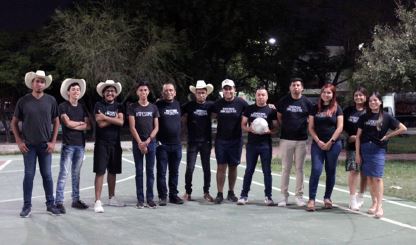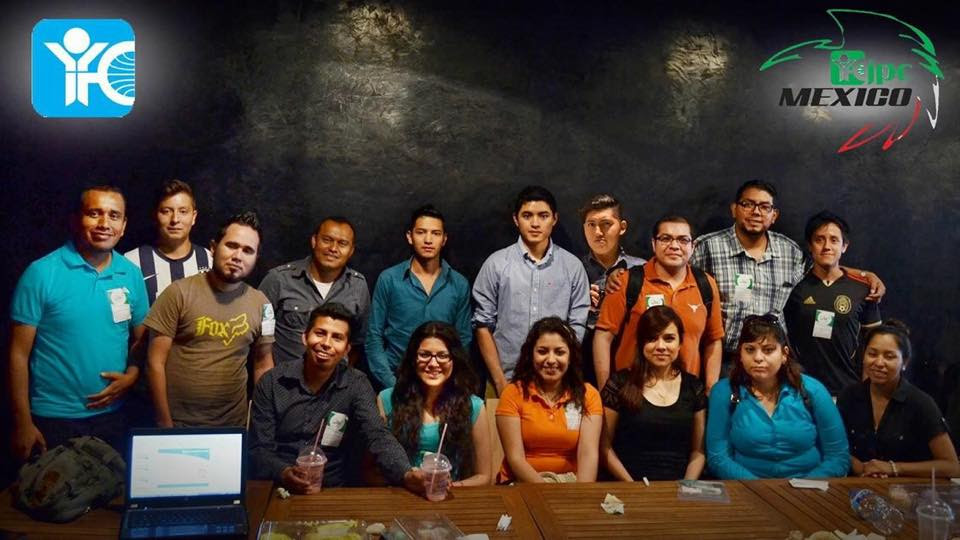
Because of you…

Young people in Mexico are reached using the following ministries:

  • community development
  • computer/business training
  • conference/retreat centre
  • evangelism
  • literature
  • music teams
  • TESL
  • young leader training
  • evangelism training

About Mexico

Mexico

Map of Mexico

Introduction

The site of advanced Amerindian civilizations, Mexico came under Spanish rule for three centuries before achieving independence early in the 19th century. A devaluation of the peso in late 1994 threw Mexico into economic turmoil, triggering the worst recession in over half a century. The nation had been making an impressive recovery until the global financial crisis hit in late 2008. Ongoing economic and social concerns include low real wages, underemployment for a large segment of the population, inequitable income distribution, and few advancement opportunities for the largely Amerindian population in the impoverished southern states. The elections held in 2000 marked the first time since the 1910 Mexican Revolution that an opposition candidate - Vicente FOX of the National Action Party (PAN) - defeated the party in government, the Institutional Revolutionary Party (PRI). He was succeeded in 2006 by another PAN candidate Felipe CALDERON. In January 2009, Mexico assumed a nonpermanent seat on the UN Security Council for the 2009-10 term.

Geography

Location

Location: Middle America, bordering the Caribbean Sea and the Gulf of Mexico, between Belize and the United States and bordering the North Pacific Ocean, between Guatemala and the United States
Geographic Coordinates: 23 00 N, 102 00 W

Area

Total Area: 1,964,375 sq km Rank: 15
Land Area: 1,943,945 sq km
Water Area: 20,430 sq km
Comparison: slightly less than three times the size of Texas
Land Boundaries: 4,353 km
Bordering Countries: Belize 250 km, Guatemala 962 km, US 3,141 km
Coastline: 9,330 km

Climate

varies from tropical to desert

Terrain

high, rugged mountains; low coastal plains; high plateaus; desert

Elevations

Lowest Point: Laguna Salada -10 m
Highest Point: Volcan Pico de Orizaba 5,700 m

Natural Resources

petroleum, silver, copper, gold, lead, zinc, natural gas, timber

Land Use

Arable land: 12.66%
Permanent Crops: 1.28%
Other: 86.06% (2005)
Irrigated Land: 63,200 sq km (2003)
Renewable Water Resources: 457.2 cu km (2000)
Total Freshwater withdrawal (domestic/industrial/agricultural): 78.22 cu km/yr (17%/5%/77%)
Freshwater Withdrawal Per Capita: 731 cu m/yr (2000)

Environment

Natural Hazards: tsunamis along the Pacific coast, volcanoes and destructive earthquakes in the center and south, and hurricanes on the Pacific, Gulf of Mexico, and Caribbean coasts
Environmental Issues:
scarcity of hazardous waste disposal facilities; rural to urban migration; natural fresh water resources scarce and polluted in north, inaccessible and poor quality in center and extreme southeast; raw sewage and industrial effluents polluting rivers in urban areas; deforestation; widespread erosion; desertification; deteriorating agricultural lands; serious air and water pollution in the national capital and urban centers along US-Mexico border; land subsidence in Valley of Mexico caused by groundwater depletion
note: the government considers the lack of clean water and deforestation national security issues
Environmental Agreements: Party to: Biodiversity, Climate Change, Climate Change-Kyoto Protocol, Desertification, Endangered Species, Hazardous Wastes, Law of the Sea, Marine Dumping, Marine Life Conservation, Ozone Layer Protection, Ship Pollution, Wetlands, Whaling

Geography Notes

strategic location on southern border of US; corn (maize), one of the world's major grain crops, is thought to have originated in Mexico

People

Population: 111,211,789 (July 2010 est.) Rank: 11

Age Structure

0-14 years: 29.1% (male 16,544,223/female 15,861,141)
15-64 years: 64.6% (male 34,734,571/female 37,129,793)
65 years and over: 6.2% (male 3,130,518/female 3,811,543) (2010 est.)
Median Age: 25.6 years

Population Growth

Growth Rate: 1.13% (2010 est.) Rank: 121
Birth Rate: 19.71 births/1,000 population (2010 est.) Rank: 104
Death Rate: 4.8 deaths/1,000 population (July 2010 est.) Rank: 192
Net Migration Rate: -3.61 migrant(s)/1,000 population (2010 est.) Rank: 153

Urbanization

Urban Population: 77% of total population (2008)
Rate of Urbanization: 1.5% annual rate of change (2005-10 est.)

Life and Death

Infant Mortality Rate: 18.42 deaths/1,000 live births Rank: 110
Life Expectancy at Birth: 76.06 years Rank: 71
Fertility Rate: 2.31 children born/woman (2010 est.) Rank: 107

Health and Disease

HIV/AIDS - Adult Prevalence Rate: 0.3% (2007 est.) Rank: 88
People living with HIV/AIDS: 200,000 (2007 est.) Rank: 30
HIV/AIDS Deaths: 11,000 (2007 est.) Rank: 29
Degree of Risk for Major Infectious Diseases: intermediate
Food or waterborne diseases: bacterial diarrhea, hepatitis A, and typhoid fever
Vectorborne disease: dengue fever
Water Contact Diseases: leptospirosis (2009)

Nationality and Culture

Noun: Mexican(s)
Adjective: Mexican
Ethnic Groups: mestizo (Amerindian-Spanish) 60%, Amerindian or predominantly Amerindian 30%, white 9%, other 1%
Religion: Roman Catholic 76.5%, Protestant 6.3% (Pentecostal 1.4%, Jehovah's Witnesses 1.1%, other 3.8%), other 0.3%, unspecified 13.8%, none 3.1% (2000 census)
Languages: Spanish only 92.7%, Spanish and indigenous languages 5.7%, indigenous only 0.8%, unspecified 0.8%; note - indigenous languages include various Mayan, Nahuatl, and other regional languages (2005)

Education

Literacy (Meaning, age 15 and over can read and write): 86.1% Male: 86.9% Female: 85.3% (2005 Census)
School life expectancy (primary to tertiary education): 13 years Male: 14 years Female: 13 years (2006)
Education expenditures: 5.5% of GDP (2005) Rank: 50

Government

Country Name

Conventional Long Form: United Mexican States
Conventional Short Form: Mexico
Local Long Form: Estados Unidos Mexicanos
Local Short Form: Mexico
Government Type: federal republic
Capital: Mexico City (Distrito Federal) Geographic Coordinates: 19 26 N, 99 08 W

Administrative divisions

31 states (estados, singular - estado) and 1 federal district* (distrito federal); Aguascalientes, Baja California, Baja California Sur, Campeche, Chiapas, Chihuahua, Coahuila de Zaragoza, Colima, Distrito Federal*, Durango, Guanajuato, Guerrero, Hidalgo, Jalisco, Mexico, Michoacan de Ocampo, Morelos, Nayarit, Nuevo Leon, Oaxaca, Puebla, Queretaro de Arteaga, Quintana Roo, San Luis Potosi, Sinaloa, Sonora, Tabasco, Tamaulipas, Tlaxcala, Veracruz-Llave, Yucatan, Zacatecas
Independence: 16 September 1810 (declared); 27 September 1821 (recognized by Spain)
National holiday: Independence Day, 16 September (1810)
Constitution: 5 February 1917
Legal system: mixture of US constitutional theory and civil law system; judicial review of legislative acts; accepts compulsory ICJ jurisdiction with reservations
Suffrage: 18 years of age; universal and compulsory (but not enforced)

Executive Branch

Chief of State: President Felipe de Jesus CALDERON Hinojosa (since 1 December 2006); note - the president is both the chief of state and head of government
Head of Government: President Felipe de Jesus CALDERON Hinojosa (since 1 December 2006)
Cabinet: Cabinet appointed by the president; note - appointment of attorney general requires consent of the Senate
Elections: president elected by popular vote for a single six-year term; election last held on 2 July 2006 (next to be held 1 July 2012)
Election Results: Felipe CALDERON elected president; percent of vote - Felipe CALDERON 35.9%, Andres Manuel LOPEZ OBRADOR 35.3%, Roberto MADRAZO 22.3%, other 6.5%

Legislative Branch

bicameral National Congress or Congreso de la Union consists of the Senate or Camara de Senadores (128 seats; 96 members elected by popular vote to serve six-year terms, and 32 seats allocated on the basis of each party's popular vote) and the Chamber of Deputies or Camara de Diputados (500 seats; 300 members are elected by popular vote; remaining 200 members are allocated on the basis of each party's popular vote; members to serve three-year terms)
Elections: Senate - last held on 2 July 2006 for all of the seats (next to be held on 1 July 2012); Chamber of Deputies - last held on 5 July 2009 (next to be held on 1 July 2012)
Election Results: Senate - percent of vote by party - NA; seats by party - PAN 52, PRI 33, PRD 26, PVEM 6, CD 5, PT 5, independent 1; Chamber of Deputies - percent of vote by party - NA; seats by party - PRI 237, PAN 143, PRD 72, PVEM 21, PT 13, CD 6, other 8

Judicial branch

Supreme Court of Justice or Suprema Corte de Justicia de la Nacion (justices or ministros are appointed by the president with consent of the Senate)

Politics

Political Parties and Leaders: Convergence for Democracy or CD [Luis MALDONADO Venegas]; Institutional Revolutionary Party or PRI [Beatriz PAREDES Rangel]; Labor Party or PT [Alberto ANAYA Gutierrez]; Mexican Green Ecological Party or PVEM [Jorge Emilio GONZALEZ Martinez]; National Action Party (Partido Accion Nacional) or PAN [Cesar NAVA Vasquez]; New Alliance Party (Partido Nueva Alianza) or PNA [Jorge Antonio KAHWAGI Macari]; Party of the Democratic Revolution (Partido de la Revolucion Democratica) or PRD [Jesus ORTEGA Martinez]
Political Pressure Groups and Leaders: Broad Progressive Front or FAP; Businessmen's Coordinating Council or CCE; Confederation of Employers of the Mexican Republic or COPARMEX; Confederation of Industrial Chambers or CONCAMIN; Confederation of Mexican Workers or CTM; Confederation of National Chambers of Commerce or CONCANACO; Coordinator for Foreign Trade Business Organizations or COECE; Federation of Unions Providing Goods and Services or FESEBES; National Chamber of Transformation Industries or CANACINTRA; National Peasant Confederation or CNC; National Small Business Chamber or CANACOPE; National Syndicate of Education Workers or SNTE; National Union of Workers or UNT; Popular Assembly of the People of Oaxaca or APPO; Roman Catholic Church
International Organization Participation: APEC, BCIE, BIS, CAN (observer), Caricom (observer), CD, CDB, CE (observer), CSN (observer), EBRD, FAO, FATF, G-20, G-3, G-15, G-24, IADB, IAEA, IBRD, ICAO, ICC, ICCt, ICRM, IDA, IFAD, IFC, IFRCS, IHO, ILO, IMF, IMO, IMSO, Interpol, IOC, IOM, IPU, ISO, ITSO, ITU, ITUC, LAES, LAIA, MIGA, NAFTA, NAM (observer), NEA, OAS, OECD, OPANAL, OPCW, Paris Club (associate), PCA, RG, SICA (observer), UN, UN Security Council (temporary), UNASUR (observer), UNCTAD, UNESCO, UNHCR, UNIDO, Union Latina, UNWTO, UPU, WCO, WFTU, WHO, WIPO, WMO, WTO
Flag Description: three equal vertical bands of green (hoist side), white, and red; Mexico's coat of arms (an eagle with a snake in its beak perched on a cactus) is centered in the white band; green signifies hope, joy, and love; white represents peace and honesty; red stands for hardiness, bravery, strength, and valor; the coat of arms is derived from a legend that the wandering Aztec people were to settle at a location where they would see an eagle on a catus eating a snake; the city they founded, Tenochtitlan, is now Mexico City
Note: similar to the flag of Italy, which is shorter, uses lighter shades of red and green, and does not have anything in its white band

Economy

Economy Overview: Mexico has a free market economy in the trillion dollar class. It contains a mixture of modern and outmoded industry and agriculture, increasingly dominated by the private sector. Recent administrations have expanded competition in seaports, railroads, telecommunications, electricity generation, natural gas distribution, and airports. Per capita income is roughly one-third that of the US; income distribution remains highly unequal. Trade with the US and Canada has nearly tripled since the implementation of NAFTA in 1994. Mexico has free trade agreements with over 50 countries including, Guatemala, Honduras, El Salvador, the European Free Trade Area, and Japan, putting more than 90% of trade under free trade agreements. In 2007, during its first year in office, the Felipe CALDERON administration was able to garner support from the opposition to successfully pass pension and fiscal reforms. The administration passed an energy reform measure in 2008, and another fiscal reform in 2009. Mexico's GDP plunged 6.5% in 2009 as world demand for exports dropped and asset prices tumbled, but GDP is expected to post positive growth late in 2010. The administration continues to face many economic challenges, including improving the public education system, upgrading infrastructure, modernizing labor laws, and fostering private investment in the energy sector. CALDERON has stated that his top economic priorities remain reducing poverty and creating jobs.

Gross Domestic Product

GDP (purchasing power parity): $1.465 trillion (2009 est.) Rank: 12
GDP - real growth rate: -6.5% (2009 est.) Rank: 198
GDP - per capita (PPP): $13,200 (2009 est.) Rank: 83
GDP - Composition by Sector: Agriculture: 4.3% Industry: 32.9% Services: 62.8% (2009 est.)

Labor Force

Labor Force: 46.2 million (2009 est.) Rank: 13
Labor force - by occupation: Agriculture: 13.7% Industry: 23.4% Services: 62.9% (2005)
Unemployment Rate: 5.5% (2009 est.) Rank: 4% (2008 est.)
Note: underemployment may be as high as 25%

Poverty

Population below poverty line: 18.2% using food-based definition of poverty; asset based poverty amounted to more than 47% (2008)
country comparison to the world: 29
$45.39 billion (31 December 2008 est.)

Transnational Issues

International Disputes: abundant rainfall in recent years along much of the Mexico-US border region has ameliorated periodically strained water-sharing arrangements; the US has intensified security measures to monitor and control legal and illegal personnel, transport, and commodities across its border with Mexico; Mexico must deal with thousands of impoverished Guatemalans and other Central Americans who cross the porous border looking for work in Mexico and the United States

Want to know more? Show Full Profile